
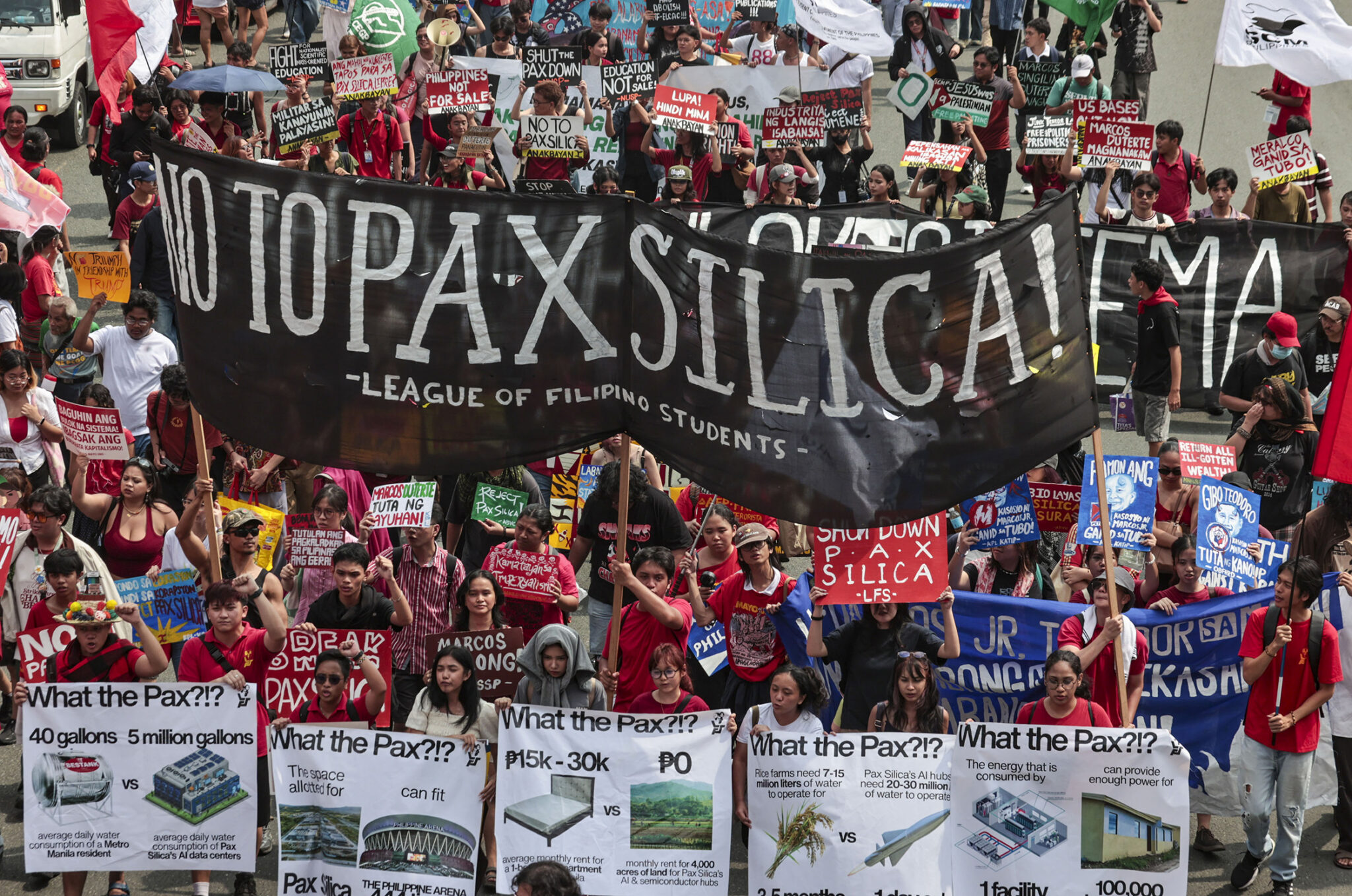
MANILA, Philippines — The Pax Silica scheme, an imperialist project imposed by U.S. Imperialism with the help of domestic bureaucrat-capitalist lackeys of the Filipino Old State, would give foreign monopoly capitalists unrestrained the ability to exploit Filipino labor and natural resources with limited legal restrictions or oversight; national democratic activists are calling for the project to be scrapped.
Positioned as a catalyst for economic development and international cooperation between longstanding “allies” against social-imperialist China as a shared rival, the Pax Silica scheme is reminiscent of the Export Processing Zone framework established by the first Marcos regime of the 1970s. In both instances, what is proposed is a designated area of lawlessness giving foreign and domestic capital free rein for massive resource extraction and labor exploitation while being isolated from domestic legal economic regulation and oversight. The intolerable conditions and lawless exploitation of workers, combined with the State-backed suppression of labor, were met with fierce resistance in the 80s, culminating in events such as the 1982 strike at Interasia Containers Industries Inc., in which 54 strikers were detained in inhumane conditions. As a result, 14,000 workers struck, which gave the workers international publicity and led to their release.
Now, the proposed scale of Pax Silica would occupy a geographic area known as the Luzon Economic Corridor and would demand massive amounts of public resources to sustain it. The expressed purpose of challenging China’s domination of global LLM supply chains reveals that the nature of the project is for U.S. Imperialism to compete with its biggest rival, China, at the expense of the Filipino people. The critical minerals extracted from such a project are vital for semiconductors, further incentivizing the plunder of the Philippines’ natural resources to support U.S. wars. As such, it reveals the position of the country subjugated by imperialist interests, as a strategic post for U.S. military operations in a cynical attempt to contain China.
The consequences of this scheme fall heaviest on the Filipino masses, who would have to endure the widespread, long-term consequences of the ecological devastation, exploitative labor practices, massive resource extraction, and enormous cost to maintain it in the service of foreign and domestic capital. These attacks against local communities are met with widespread opposition and resistance. June 12, Filipino Independence Day, was marked by mobilizations of hundreds of activists who opposed the industrial hub planned to occupy the Luzon Economic Corridor. Advocates of Science and Technology for the People (Agham) condemned the Philippines joining Pax Silica. Overseas repudiations of the project resounded from over 500 signatories representing 34 countries who condemned it in a solidarity statement put out by the International League of People’s Struggle.


[Image Source: Coalition of progressive groups, civil society organizations, educators, and other organization march toward Capitol Estate along Commonwealth Avenue on Monday, July 27, 2026. Demonstrating outside President Ferdinand Marcos Jr.’s fifth State of the Nation Address, Grig Montegrande]