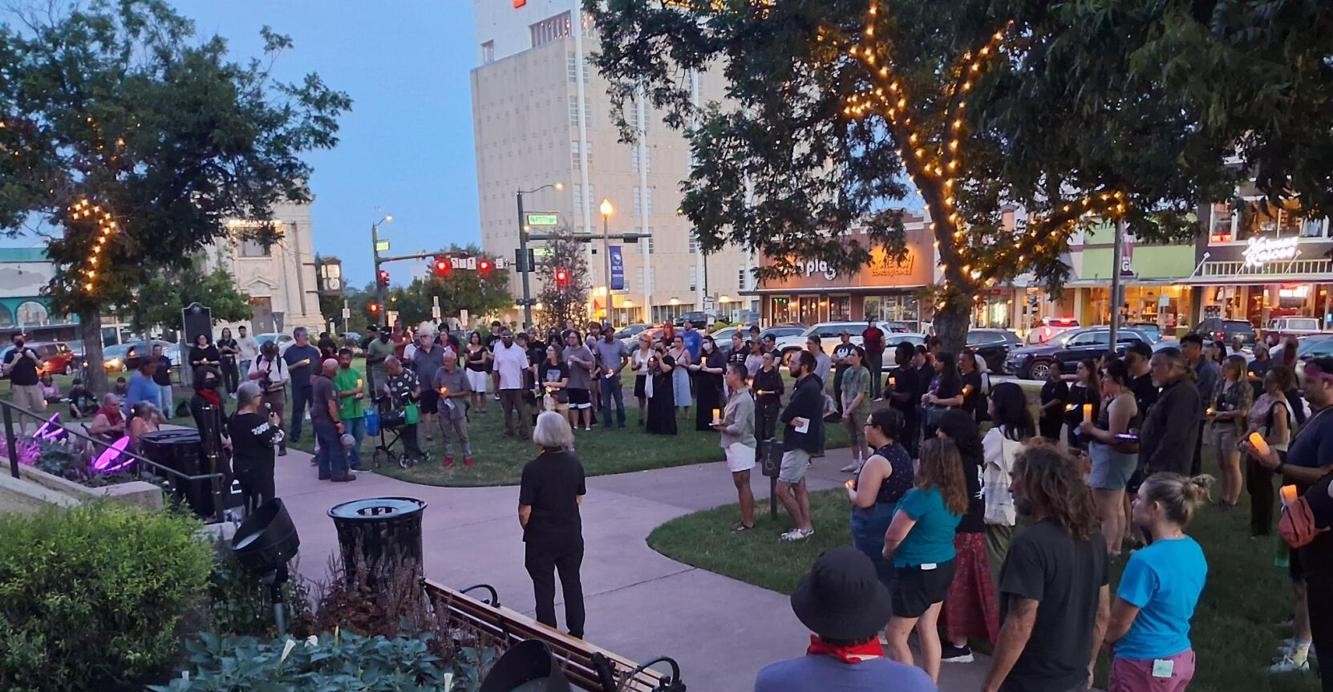
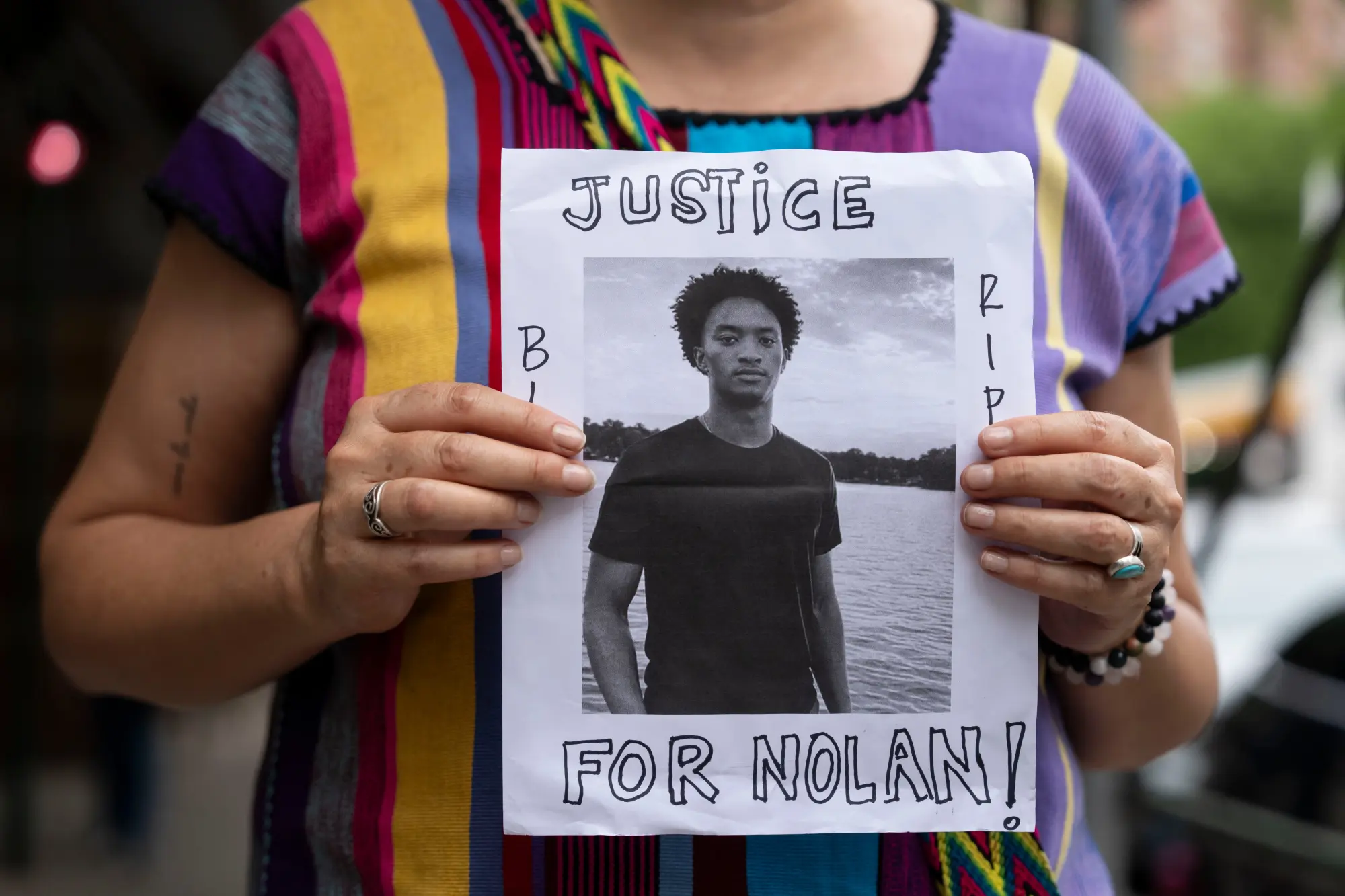
UNITED STATES — In cities all across the United States, the masses have mobilized themselves to demand justice for Nolan Wells. Nolan Wells was eighteen-years-old when he went to on a boat trip with “friends” to Horn Island, Mississippi. He was the only New Afrikan friend in this friend group. During this trip, he was left behind on the island where his body would eventually be found by a park ranger, leaving massive questions as to the manner of his death. The story given by his group of “friends” was confused and suspicious. These “friends” quickly recruited a reactionary lawyer best known for defending war criminal and pedophile, U.S. President Donald Trump.
The initial corners report ruled Nolan’s death as undetermined. A second, independent corners report was done which found more bruising than was found in the initial report. On top of that, this second report showed that there was no water in the Nolan’s throat, stomach, and lungs. Despite these facts, and massive holes in the story that has come from his “friend group,” a grand jury ruled there to be “no evidence of a crime” and upheld that Nolan Wells’ death was consistent with drowning.
The masses have rejected this ruling, taking to the streets in massive numbers in cities all across the country to demand transparency in the case and the end of State endorsed murder of New Afrikans. At the forefront of this struggle has been the dedicated youth and women of the New Afrikan masses, who have taken on large amounts of work to push for justice for Nolan. The case has sparked a resurgence of mobilizations against the systematic national oppression that permeates through the everyday lives of the nationally oppressed masses in the United States.
“Article II of the Convention of the Prevention and Punishment of the Crime of Genocide, adopted by the United Nations General Assembly on December 9, 1948, states in part that “genocide” means ANY of the following acts, committed with even the INTENT to destroy — in whole or in part — a national, ethnical, and racial or religious groups, as such:
a. Killing members of the group;
b. Causing serious bodily or mental harm to members of the group;
c. Deliberately inflicting on the group conditions of life calculated to bring about its physical destruction in whole or in part;
d. Imposing measure intended to prevent births within the group. ”
–War for The Cities, James Yaki Sayles
Nolan Wells one such example of the continuation of genocide within the United States. The State, especially within Mississippi, has had a unforgivable history of “overlooking” the suspicious deaths of nationally oppressed people. The legacy of slavery and Jim Crow lives on in the everyday lives of the New Afrikan masses and the nationally oppressed.
Nolan Wells’ case brings renewed attention to the enduring legacy of genocidal violence and national oppression within the United States. The State, particularly in Mississippi, has had a unforgivable history of “overlooking” the suspicious deaths of nationally oppressed people. The legacy of slavery and Jim Crow persists in the institutions governing the everyday lives of the New Afrikan masses, sustaining conditions in which their deaths are readily dismissed and their demands for justice remain unanswered.
The Black Panther Party demonstrated that the State will not protect the lives of nationally oppressed people. The only way to secure justice is for the masses to demand it through persistent, steadfast, and durable organization. The lessons of history show that rebellion, when taken up by the masses, must be connected and concentrated in a way that denies the possibility of co-optation. The State is incapable of fulfilling the demands of the masses, it must not be allowed to siphon their indignation.
A nationally oppressive superstructure, rooted in U.S. Imperialism’s material history of genocide and slavery, protects those who harm New Afrikans. Class oppression manifests itself in the U.S. through national chauvinism and the degradation and exploitation of the New Afrikan masses and all other nationally oppressed people. It is essential that the masses build strong forces ready to mobilize in their neighborhoods, schools, and workplaces against the forces of the State in all sectors. When justice is denied, the promise of “no peace” must be upheld until the demands of the masses are met.
JUSTICE FOR NOLAN WELLS
END THE WAR ON THE NEW AFRIKAN MASSES