
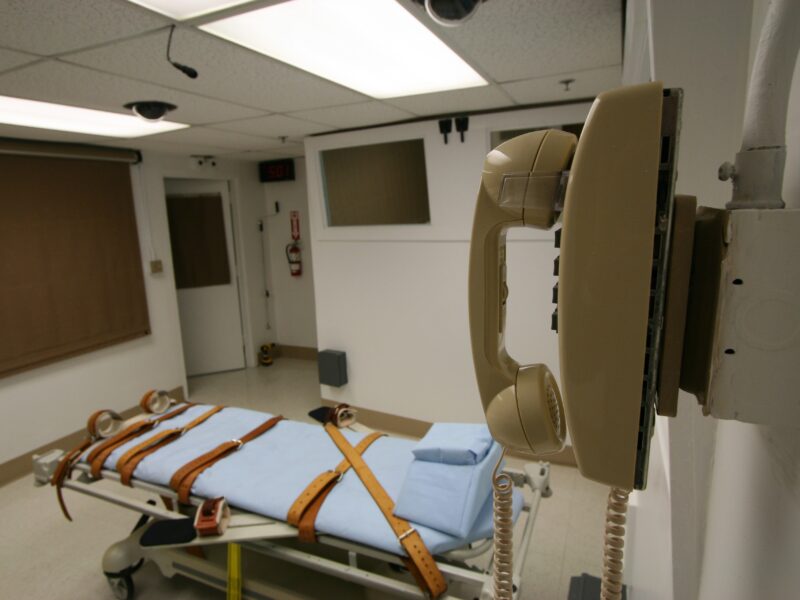
INDIANA – On June 5th, 2026 the U.S. Court of Appeals for the Seventh Circuit upheld Indiana law prohibiting journalists from witnessing state executions in a divided 2-1 decision.
Beyond the prison warden, medical staff and up to eight members of the victim’s family, state law limits execution witnesses to up to five family members or friends of the convicted person and their spiritual adviser on an invite only basis, prohibiting journalists.
The challenge against Indiana’s execution witness policy was sparked in December 2024 when Indiana resumed the execution of death row inmates for the first time in 15 years. The Associated Press and other news organizations, represented by Reporters Committee for Freedom of the Press, argued that the restrictions violate First Amendment protections.
While the panel majority ruled against the news organizations, Judge Candace Jackson-Akiwumi dissented, arguing that executions are the greatest exercise of state power and must be observable.
“A government exercises its greatest power when it ends a person’s life,” Jackson-Akiwumi wrote, “As I see it, such severe and irreversible punishment on behalf of ‘the people’ must be observable to comply with the Constitution.”
Reporters Committee for Freedom of the Press attorney, Lin Weeks, remains hopeful that the news organizations have a strong chance at prevailing, despite the federal appeals court’s decision.
“The press and the public have a First Amendment right to observe executions absent a specific, compelling reason to the contrary,” said Lin Weeks, “Press access is vital to ensure impartial, complete accounts of executions carried out in the publics name.”