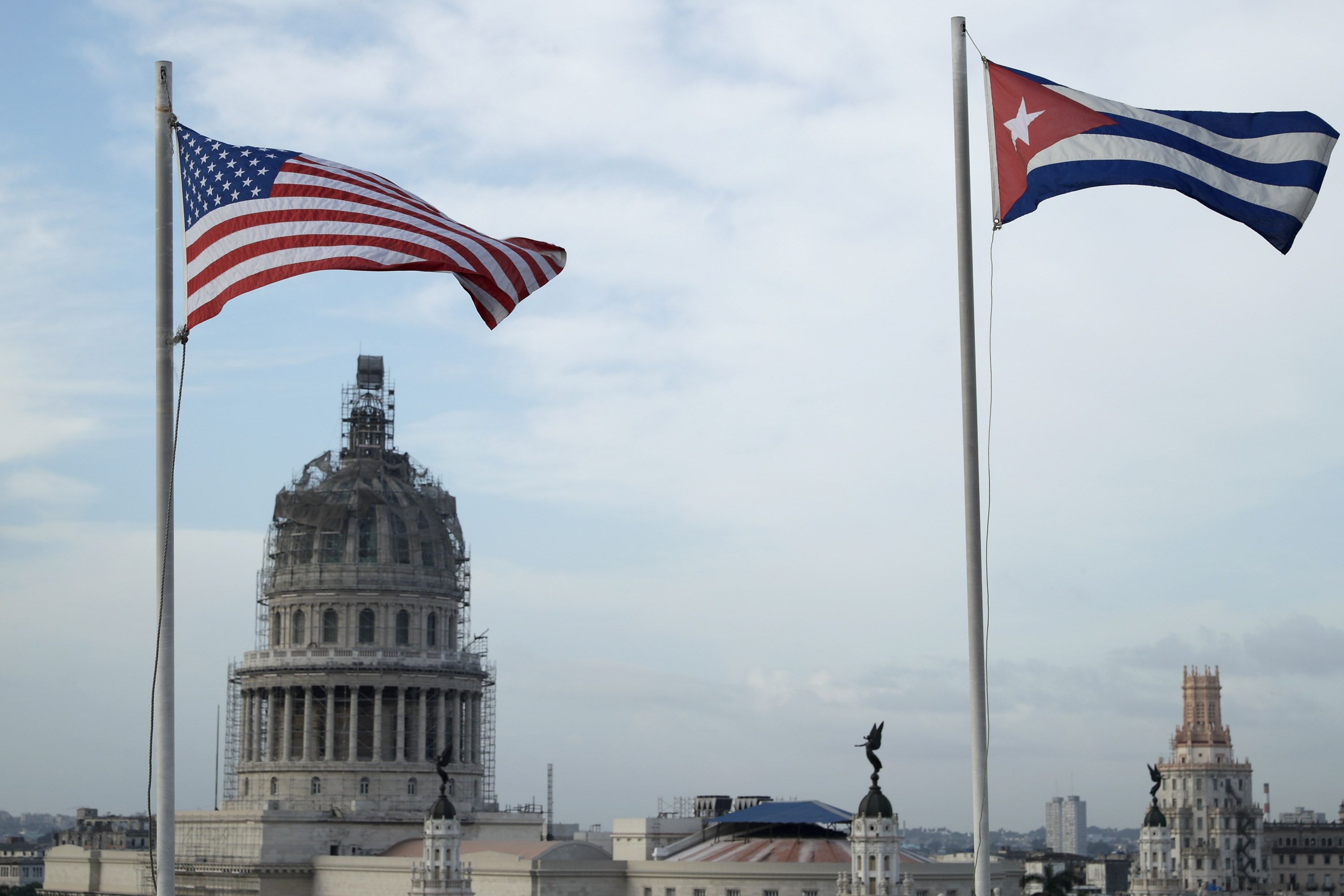
CUBA – U.S. Imperialism is intensifying its siege on and preparing for a military invasion of Cuba, after facing a strategic defeat in its unpopular war on Iran. On June 12, amidst these preparations, the revisionist Communist Party of Cuba and its First Secretary, Miguel Diaz-Canel, announced the implementation of market reforms through its ratified Economic and Social Program for 2026.
Internally, the proposed measures include decentralizing parts of the State apparatus in order to expand the participation of state companies in foreign exchange markets, to permitting private companies to hire more than 100 workers, and allowing real estate firms to carry out the sale and purchase of the people’s means of housing. In addition, private banks would be able to enter the country’s finance sector, leaving the Cuban people vulnerable to bourgeois aggression. Class distinctions in Cuba are exacerbated, as the reforms also include the removal of wage restrictions for employers to retain highly skilled professionals and workers. Diaz-Canel justified these measures as a resilience response to the U.S. embargo; however, the reality is the internal contradictions have already led to widespread resistance from the Cuban masses long before the new market reforms.
Externally, U.S. and E.U. imperialists are increasing their calls for sanctions and pressure on Cuba against Diaz-Canel and domestic business conglomerate Grupo de Administracion Empresarial SA. On June 22, the Supreme Court of the United States ruled in favor of the Old State’s multinational corporations to sue Cuba for billions as recuperation from its armed struggle in the 1950s and 60s. The Exxon Mobile Corp. v. Corporación Cimex, SA ruling would increase U.S. imperialism’s desperate pressures on Cuba by exposing its national industry to billions of dollars in liability.
Additionally, the European Union passed a resolution threatening to suspend the EU-Cuba Political Dialogue and Cooperation Agreement, while weaponizing anti-Cuban rhetoric to undermine Cuba’s right to sovereignty.
The period from 1959 to 1961 marked major victories in the Cuban people’s struggle against the paper-tiger of U.S. Imperialism and the Batista regime, beginning with the triumph of the Cuban Revolution and culminating in the defeat of the Bay of Pigs invasion. The Cuban Revolution inspired revolutionary struggles across the world, especially in Latin America and Africa, and made Cuba a primary target of the U.S. Old State, which has imposed decades of blockades, attacks, and embargoes against the Cuban people. In particular, the Cuban people inspired oppressed masses across Latin America to take up arms and break with the parliamentarism of the comprador-bureaucrat capitalists.
However, it was not left without serious consequences on the political-ideological front. The Cuban Revolution, the struggle of the Cuban people for national self-determination and Socialism, emerged in the current of modern revisionism, counterrevolution and capitalist restoration in the USSR after the passing of Comrade J.V. Stalin in 1953, led by the Khrushchev clique during the 20th Congress of the Communist Party of the Soviet Union (Bolsheviks) in February 1956. The betrayal of the revolutionary road in the Soviet Union saw the re-enslavement of its proletariat and oppressed peoples and nations and would leave significant ramifications for the World Proletarian Revolution. Therefore, the new democratic revolution in Cuba has been left unfinished.
Fidel Castro, the First Secretary of the party from 1965 to 2011, was radicalized by the contradictions of the U.S.-backed bureaucrat capitalists and big landlords and mobilized the popular masses toward armed struggle, leading them to a major singular victory against the Bautista regime and U.S. Imperialism. However, despite the implementation of popular measures, including agrarian reform and free access to basic necessities, the bureaucratic character of these reforms and the adoption of a pro-Soviet line pushed Cuba further down the road of revisionism and neocolonial dependency.
The country adopted an import-dependent, export-oriented economy, became a neo-colony of Russian imperialism and Chinese social-imperialism, and gradually rescinded their support for liberation movements in both Africa and Latin America. Castroismo and focoismo emerged as definitively based in petite-bourgeois and bourgeois, not proletarian, politics and ideology; thus, the party was detached from the working and poor peasant masses and embraced anti-people measures under the pretext of protection from U.S. intervention, preventing a true new democratic and Socialist revolution from taking fruition.
The lessons of the Cuban Revolution, the bloodthirsty blockades against the Cuban people by world imperialism, and recent liberalization efforts of the revisionist Cuban Communist Party are pertinent for building a combative and class-conscious anti-imperialism. Thereby, the multi-national U.S. working class must unite itself with the Cuban people to condemn the genocidal measures of U.S. Imperialism and support the Cuban nation’s right to national self-determination. A new solidarity movement for Cuba, one based in proletarian internationalism, anti-revisionism, anti-opportunism, led by the workers themselves, is the only solution to principally link class struggle and organize the masses into militant action in service of defeating imperialism, at home and abroad.