
MADRID, Spain – A wave of housing protests has forced one of the sharpest contradictions in contemporary Spanish society into the center of national politics. After the eviction of 87-year-old María del Carmen “Maricarmen” Abascal ignited occupations and demonstrations throughout Spain, parliament rejected two emergency housing decrees. Prime Minister Pedro Sánchez then dissolved parliament and called a November 29 snap election, while the government reissued modified housing measures only days later. The election is formally a general election, but Sánchez and his ministers have attempted to turn it into a reformist referendum on housing policy, while tenants, neighborhood organizations and workers continue to struggle in direct confrontation over housing as a human need rather than investment asset for landlords, banks, investment funds, and the capitalist class.
On September 23, when police forcibly removed Maricarmen from the Madrid apartment where she had lived since 1956. Hundreds gathered outside in an attempt to prevent the eviction, but riot police cleared the building and Maricarmen was carried away on a stretcher. Her landlord, the real estate company Urbagestión, had demanded rents far beyond what she could afford on her pension. A United Nations committee had asked Spain to suspend the eviction or guarantee adequate alternative housing while it examined her case, yet the eviction went ahead.
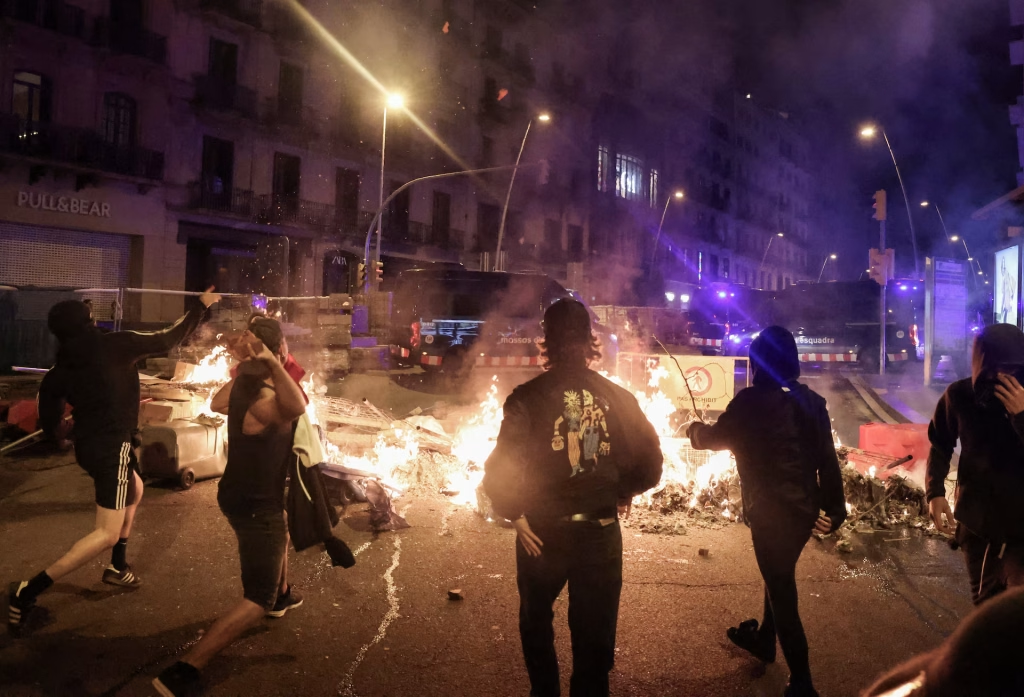
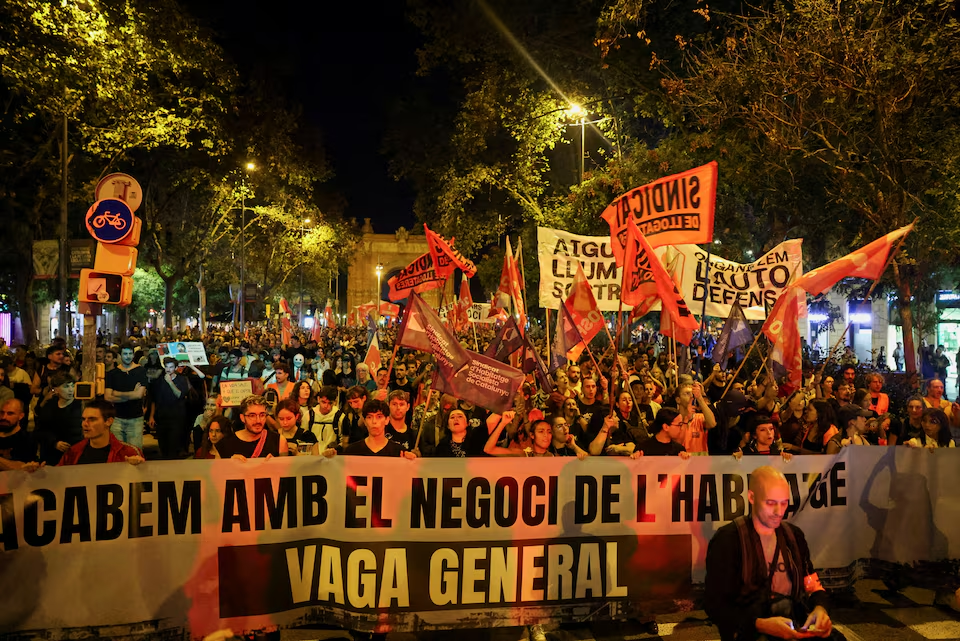
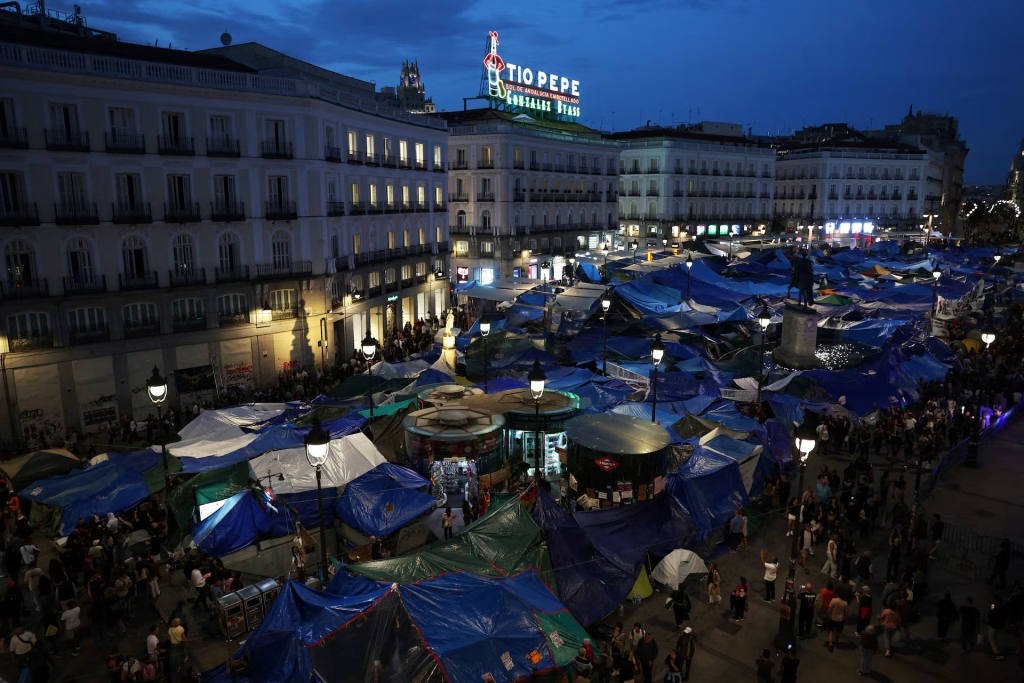
Within days, Maricarmen’s eviction had become a rallying point for actions across Spain. Tens of thousands marched in Madrid under the slogan “Not one more Maricarmen,” while demonstrations spread through Barcelona, Valencia, Seville, Zaragoza, Alicante and dozens of other cities. Protesters established an encampment in Madrid’s Puerta del Sol, the same central square occupied during the 2011 anti austerity movement. The camp rapidly developed from a protest around Maricarmen’s eviction into a nexus for housing struggle, bringing together tenants, young workers, neighborhood militants, students, and masses with little previous organizing experience.
After five days of demonstrations, Urbagestión agreed that Maricarmen could return under a new lease with rent capped at roughly 30 percent of her income. Protesters nevertheless refused to dismantle the Puerta del Sol camp. Soon after, Maricarmen died in hospital on October 7 from complications compounded by her forced eviction. Thousands marched from Puerta del Sol toward her home, while demonstrations and memorial actions were also held in Barcelona and Seville. The Madrid encampment remained in place under the slogan, “We are not leaving, we are staying!”
The conditions behind Maricarmen’s eviction extend far beyond Madrid. Housing costs in Spain have risen far faster than wages, while more than half of people between 18 and 34 either live with their parents or depend on them financially. Spain has one of the smallest stocks of social housing in the European Union, at around 1.7 percent of the total housing stock. The Bank of Spain estimates a housing shortage of roughly 750,000 homes, potentially reaching one million by 2028. While 73 percent of Spaniards own their homes, younger workers increasingly confront a market in which both ownership and renting are pushed beyond reach.
Rents have nearly doubled nationally over the past decade, rising from an average of €8.20 per square meter in 2016 to €15.10 in 2026. In Madrid and Barcelona, the increases have been even sharper. Tourism and short term rentals have intensified pressure in major cities, while corporate investors and large landlords have become central targets of tenant organizing. The Madrid Tenants’ Union has demanded restrictions on the corporate investors they call “vulture funds,” new protections against eviction, rent controls, and greater security for tenants.
Sections of the labor movement began discussing a general strike centering the housing struggle. By early October, mobilizations had spread to roughly 50 cities. Official estimates placed the October 3 to 4 weekend turnout at around 70,000, while organizers claimed participation as high as 500,000.
Sánchez’s minority government introduced two housing decrees, but the measures were defeated on October 2 by opposition votes. The proposals included temporary protections against eviction, rent controls, limits on corporate purchases of residential property and extensions of rental contracts. The movement criticized the measures as insufficient, arguing that temporary extensions merely postponed the underlying contradiction and left landlords with continued power over tenants. The rejection of the partial measures only intensified street mobilization and exposed the government’s inability to intervene even in a limited capacity to stabilize the housing market.
Sánchez responded by dissolving parliament and calling a general election for November 29, eight months ahead of the regularly scheduled 2027 vote. On October 6, the cabinet approved revised housing decrees that temporarily introduced rent caps, eviction protections and limitations on corporate housing purchases. The measures still require parliamentary approval. A second decree providing automatic renewal of rental contracts likewise requires approval before taking effect. The revised rules also extended restrictions on purchases by large investment funds through the end of 2030 and subjected companies renting more than 10 homes to similar obligations.
The present protests have also drawn renewed attention to long running housing struggles such as La Cañada Real. On Madrid’s outskirts, working class families, including large Moroccan, Romanian and Roma communities, have fought demolition and forced relocation for years. Residents have confronted poverty, exclusion, stigmatization and redevelopment plans that threaten communities.
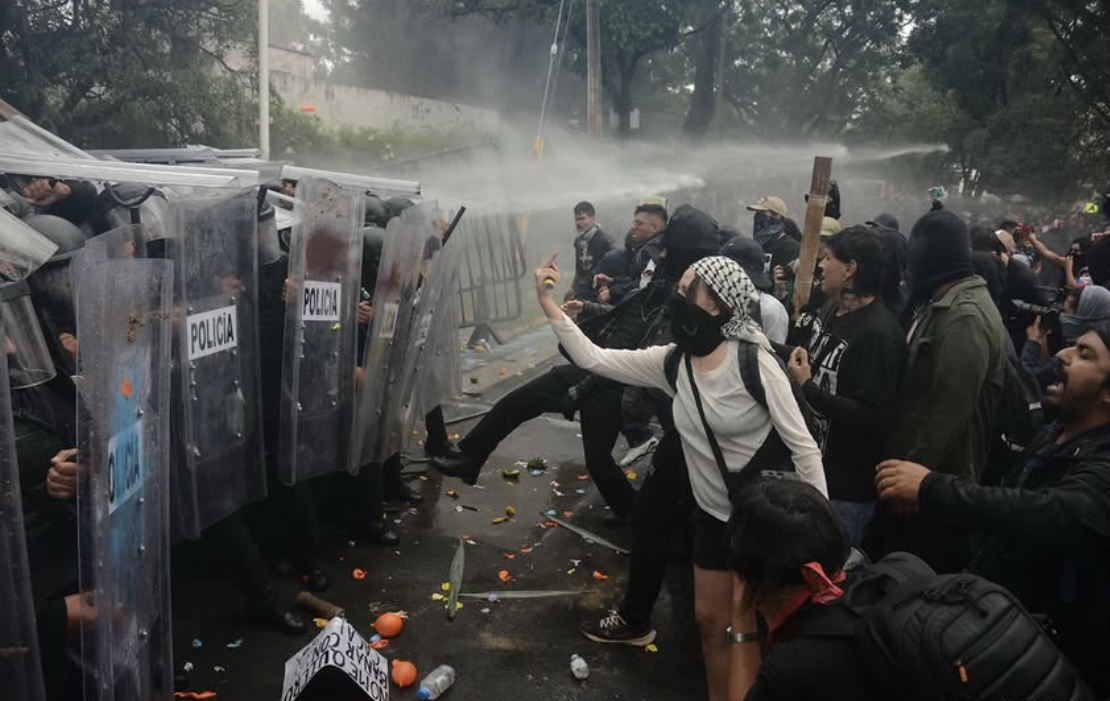
Repression and reactionary mobilization have accompanied the protests. Police used rubber bullets and tear gas against demonstrators in Valencia, while authorities arrested members of a reactionary group that attempted to approach the Puerta del Sol encampment in Madrid. Protesters organized security around the camp after threats from reactionary organizations.
As asserted by the Spanish movement, the housing struggle must not be subordinated to electoralism. Continuing encampments, calls for a general strike, and demonstrations following Maricarmen’s death have shown that concessions have been won through pressure from the streets, not parliamentary maneuvering. Revolutionary activists at Puerta del Sol have called for an election boycott and an independently organized general strike.
Within weeks, the eviction of Maricarmen sparked a fire from years of accumulated resentment and indignant class hatred toward landlords, speculators and the exploiting class. While parliamentary parties bicker and struggle over how to contain or manage the crisis, thousands continue to mobilize in the streets, occupy public squares, and organize around the demand that housing serve the people rather than landlords and capital.
[Image Source: Protesters clash with Spanish police in Valencia, Kai Forsterling]