“In looking back, we must never forget those comrades who gave their lives for the people, nor forget our mistakes – but constantly sum up the things we’ve learned. Yet our look back must be a glance to see where we’re going, so as not to travel the same road, where so many difficulties beset us. Let us look to the future with faith, and knowledge that the experiences of the past will be guides in assessing and implementing our present programs that will take us to victory in the future.”
These were the words of the Black Liberation Army for New Year 1975. Today, on the occasion of Black August, a month of struggle and remembrance, let us keep these words close to our hearts, remembering all those who have given their lives as part of the heroic African revolutionary tradition, and looking to the stormy future with firm faith in our inevitable victory.
African people – whether in the diaspora or in Africa – have always held the undaunted desire to be liberated . No trials or tribulation could destroy this desire: not the slaver of the past nor the imperialist of the present. Let us recall, that in 1521, only 3 years after the official legalization of the European slave trade, the first African uprising took place in Santo Domingo (modern day Haiti). The history of the entire epoch of Colonialism and Neo-colonialism is also the history of the tremendous struggles of the oppressed people and nations, who, as proud protagonists, wrote pages of history with their lives and blood, with arrows, swords, and bullets.
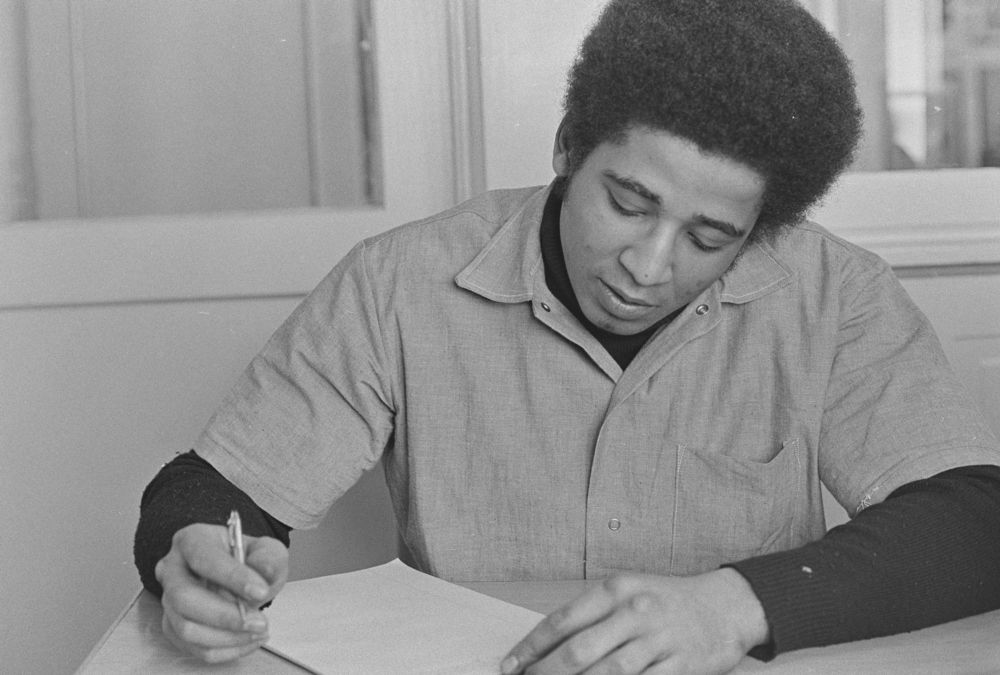
The events that gave rise to Black August was one such glorious chapter. On August 21, 1971, George Jackson courageously gave his life in rebellion against the U.S. imperialist prison system. His brother, Jonathan, was martyred on August 7, 1970, in another armed action. Like many others, the Jackson brothers have been immortalized as model revolutionaries, whose shining example remains in the struggle of the working and oppressed people of the world.
But the history of Black August did not stop there. August has repeatedly been marked by revolts, rebellions, and struggles for national liberation throughout the African diaspora and in Africa. As the first enslaved Africans arrived in the present-day U.S. in August, the Haitian revolution, the first successful African revolution in world history, also took place in August. Similarly, it was in August that Nat Turner led one of the most significant uprisings of enslaved people in U.S. history.
More than a century later, the Watts uprising erupted in Los Angeles amid anger over police brutality and national oppression. August is also the birth month of Black Panther leader Fred Hampton, the honorable Marcus Garvey, Pierre Mulele out of Congo, revolutionary leader of FRELIMO Josina Machel, and Angolan revolutionary poet Mario Coelho Pinto de Andrade. We laid to rest revolutionaries W.E.B Du Bois and Fela Kuti. That history continues into the present: the Ferguson uprising began in August 2014, and the nationwide Floyd protests of 2020 continued through the month.
On the continent of Africa, Africans all over were in revolutionary spirits with the diaspora from occupied Azania (South Africa) to Burkina Faso. On 4 August 1983, Thomas Sankara led the Burkinabè Revolution, fighting for national liberation through the force of arms. A year later in the same month, the country was renamed Burkina Faso, “land of upright people.” We had African women refusing to be silent about the European colonial government trying to restrict their movements, and they organized 20,000 women to storm the union and burn their passes to reject the Pass Law, marking August 2nd as Azania Women’s Day. Then Kwame Nkrumah and Patrice Lumumba, with Ghana and Congo’s secret agreement, contributed to the unity of Africa and her children.
Together, these events have made August a month associated not only with remembrance, but with a long tradition of African strength and resistance. They have taught that there is no peace between oppressors and the oppressed: everything is gained through organized militancy and resolute struggle against the imperialists and Western domination, with the highest form being armed struggle and organization, the only way to overthrow the rule of U.S. imperialism once and for all.
Today, imperialism has entered its last and general crisis. On the one hand, this is marked by the escalating imperialist plunder and Western violence against the oppressed people; on the other hand, as oppression engenders resistance, fires of revolution and rebellion are being lit up across the third world. Countries want independence, nations want liberation, and peoples want revolution. Revolution is the main trend in the world today.
These situations create a set of necessary tasks for revolutionaries today in the bellies of U.S. imperialist beast. The first and foremost task is to raise up the banner of anti-imperialism and support for national liberation. The various progressive and revolutionary organizations in Africa said it well in “Letter to the Global North”:
“[T]oday, we must acknowledge that our current level of coordination is insufficient to meet the challenges we face. We can no longer tolerate isolation. The centralized power of capital coordinated through NATO, financial markets, and multinational corporations demands a centralized resistance. Theoretical solidarity is meaningless without action. We shall advance strategic coordination. We must operationalize international solidarity – a militant, synchronized struggle aimed at dismantling the infrastructure of imperialism.”
It is imperative for revolutionaries in the imperialist countries to advance strategic coordination, and carry out international solidarity with the anti-imperialist movement of the oppressed people, not only in words, but in deeds. This calls for all forms of moral and material support to revolutionaries in the Third World, in particular, Africa and the African diaspora. This also includes waging revolutionary struggle and strategic intervention here in the belly of the beast as the best form of aiding and coordinating with the anti-imperialist struggles.
This leads to the second main task of carrying out revolutionary mass work and mass struggle among the working class and oppressed people. President Sékou Touré of Guinea-Conakry taught: “To take part in the African revolution it is not enough to write a revolutionary song: you must fashion the revolution with the people. And if you fashion it with the people, the songs will come by themselves.” This quote is valid not only for the African revolution but for revolutions everywhere. We understand that people, and the people only, are the makers of history. Revolutionaries must integrate with the masses, live with, work with, and struggle with them, propagate revolutionary thoughts among the masses, expose the reality of capitalist-imperialism, and wage militant struggle against exploitation and oppression everywhere.
Sékou Touré once declared in 1971: “People of Africa, from now on you are reborn in history, because you mobilize yourself in the struggle and because the struggle before you restores to your own eyes and renders to you, justice in the eyes of the world.” It is only through organized militant struggle against the enemy, without compromise and retreat, that the old systems and things created by imperialism are destroyed, and that socialist systems and new things rise up to take their place. To struggle, to replace the old with the new, is to answer the call put forward by history.
With the same revolutionary optimism, Chairman Mao, leader of the Chinese revolution foretold inevitable future in prophetic words:
“The evil system of colonialism and imperialism arose and thrived with the enslavement of Negroes and the trade in Negroes, and it will surely come to its end with the complete emancipation of the Black people.”
At the occasion of Black August, let us solemnly pay the highest tribute to the heroes who laid down their lives in the African people’s wars for national liberation, and to the heroes who had given their lives in the centuries of struggle to resist the enemy for the independence and freedom of the people. We must honor their names by doing our duty: continuing the struggle until final victory.
Honor and glory to the heroes of the people!
Long live the African revolutionary struggle!
A Luta Continua – Vitória é Certa!
All-African People’s Revolutionary Party
Revolutionary Front – USA