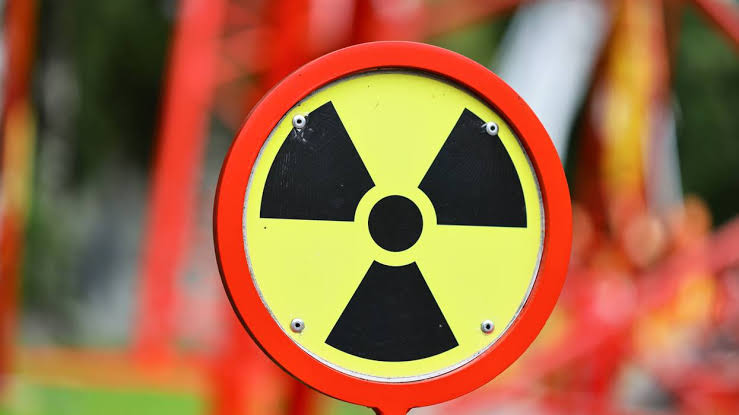
NIAGARA, N.Y. – At least four families have been relocated after a radiological survey of Niagara County found over ten times the normal level of radiation in and around their homes. As investigators continue to test properties around Niagara and neighboring Erie County, affected people have been left waiting for more information and further assistance. The capitalist State abandons the destruction industry leaves behind, offering nothing but calls for patience to those forced to live in it while the poison spreads. This region has seen this battle before, and its people are prepared to fight it again.
Federally, the Superfund Program is generally tasked with handling hazardous waste contamination, including evacuations. But the process to get permanent relocation can be long and arduous, and approval is usually only given one family at a time. New York State has its own Superfund program that may have been able to assist these residents and make progress on remediation more quickly, but New York’s program excludes radioactive waste.
The masses of Western New York are familiar with the Superfund Program. One of the infamous waste sites that led to its creation in 1980 was Love Canal, a neighborhood in the city of Niagara Falls only about five miles away from the homes that were recently evacuated. For many residents of Love Canal, who had a slurry of toxic chemicals leaching into their basements and forming puddles in their yards, it took years of organizing to get the assistance they needed in order to leave.
In July, a new organization called “Save Our Backyards Niagara” held its first meeting, with over 150 people in attendance. The four residents with confirmed contamination told their story to the community, who have continued to meet and unite around a set of demands that echo those from Love Canal decades before: full transparency, permanent relocation for affected families, an investigation into the polluters, and a state-level Superfund designation.
Western New York was a center of industry during World War II and hosted several facilities that produced materials for it, including companies involved with the Manhattan Project. Some of that waste took the form of slag, a gravel-like material, and was spread throughout the county to be used as fill for driveways and parking lots.
The issue of hazardous industrial waste is not unique to Western New York. There are hundreds of sites on the Superfund Program’s National Priorities List located around the country, mostly at landfills, industrial sites, and military facilities. There is no shortage of new contamination events, especially as deregulation weakens even the mildest protections the environment and the people have against being poisoned.
The impact of contamination can easily outlast the corporations involved. Many sites have been on the list for decades, or were contaminated decades before being added to the list. Others have yet to be added.
That many properties in Niagara County are contaminated with radiation may have been news to the residents, but the officials knew what they were going to find. New York State released a report in 1981 examining the scope of the problem. Over the years, there has occasionally been cleanup work done on locations where radiation is particularly severe or glaring, including a contract awarded in 2023 to remove waste from a Manhattan Project storage site. The ongoing survey is the first systematic investigation of the situation in at least 40 years.
As the survey draws to a close, it will take organization and action to prevent the remaining contamination from getting the same treatment it has received since the 1980s: silence.
Legislative amendments and expanded Superfund classifications cannot resolve the underlying contradiction at the root of this crisis. Capitalism produces environmental-ecological devastation as a byproduct of production organized for profit rather than need. Only a democratic and planned economy, one organized around the needs of the masses rather than the accumulation of capital, can undertake environmental remediation and ecologically conscious production as a matter of course rather than a battle the poisoned must win generation after generation.