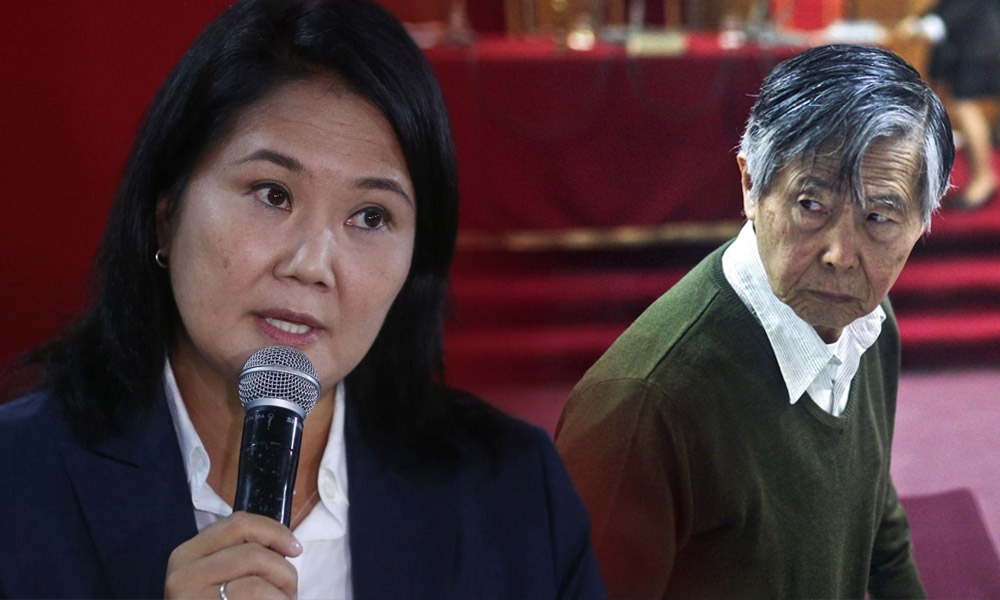
LIMA, Peru – Keiko Fujimori, daughter of genocidal dictator Alberto Fujimori, took office July 28 as president of Peru, returning the Fujimori family to executive power more than two decades after her father’s regime collapsed in disgrace.
The first round, held on April 12, featured 36 candidates; of these, most had no coherent platform. Two candidates advanced to the second round: Keiko Fujimori of the Fuerza Popular party, representing 17 percent of the votes, and Sánchez Palomino of Juntos por el Perú, representing 12 percent of the votes. The largest bloc was the vote of rejection: 30 percent of voters either cast null or blank ballots or abstained. In this way the masses displayed their contempt for the electoral farce itself.
On July 3, the National Office of Electoral Processes, or ONPE, formally announced that in the second round Keiko Fujimori received 50.13 percent against 49.86 percent for Palomino; the margin was less than 50,000 votes out of nearly 20 million cast.
The runoff produced immediate denunciations of irregularities. Sánchez pointed to discrepancies in overseas voting, polling stations failing to open in working-class neighborhoods, abandoned and trashed ballot boxes, and chaos inside the ONPE including the forced resignation of Piero Corvetto, the head of the ONPE. After the vote, protests erupted in Lima, Puno, Juliaca, and other cities. The regime answered with a repression force of over 7,000 officers, cordons, blocked streets, a fleet of drones, and the closure of public spaces.
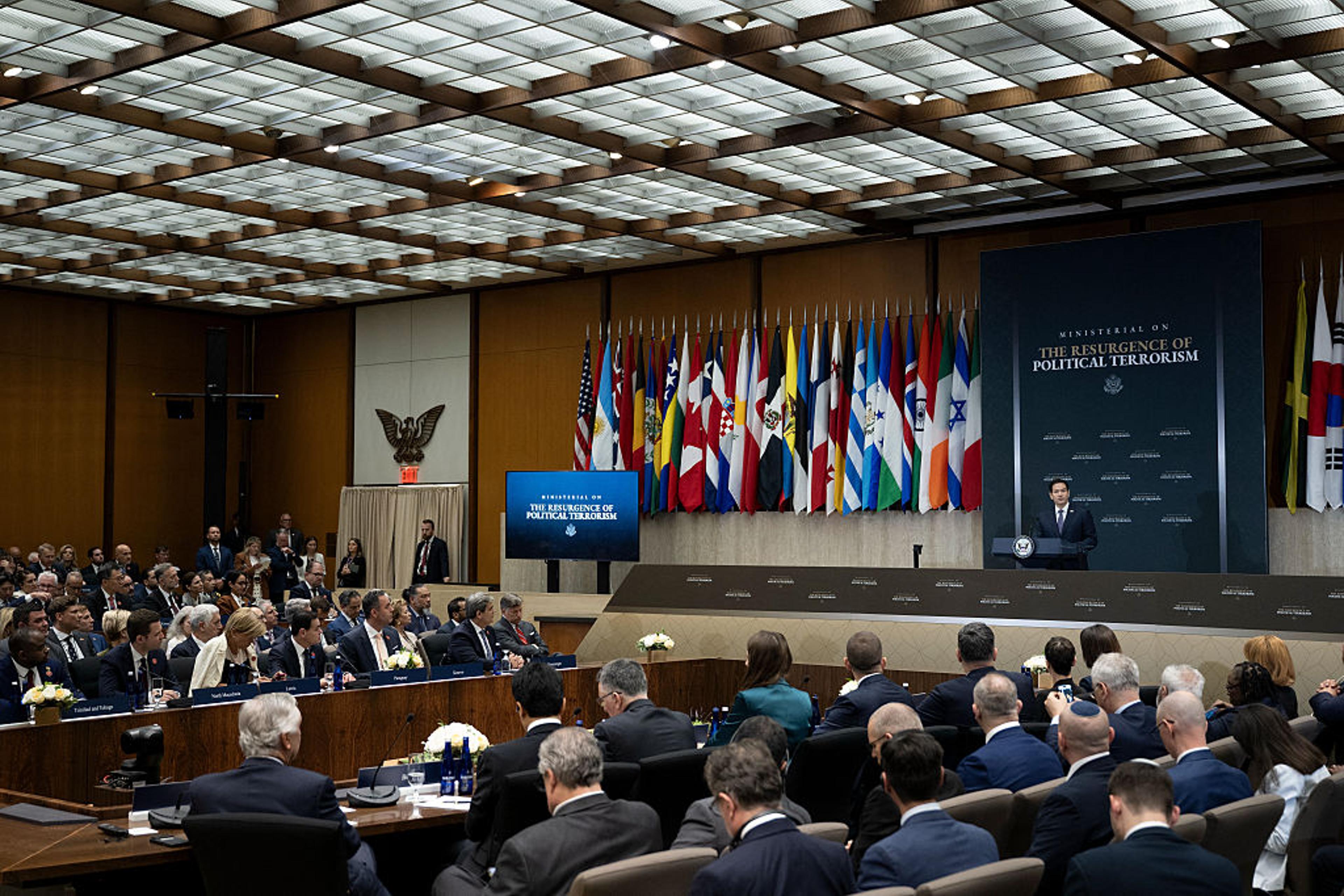
Within hours of her victory, U.S. Secretary of State Marco Rubio congratulated Fujimori, hailing “her important electoral victory.” Fujimori’s victory was immediately welcomed by U.S. Imperialism as an element in its campaign to tighten domination over Latin America, expel Chinese influence where possible, and prepare reliable regimes for coming social explosions.
At the center of this struggle is Chancay, the Chinese-operated megaport north of Lima. COSCO Shipping Ports operates Chancay as a major Pacific logistics hub linking South America to Asia. For Chinese Social-Imperialism, Chancay is a strategic foothold. For U.S. Imperialism, it is a provocation on territory it still treats as its backyard under the Monroe Doctrine. The State Department and Pentagon have answered with pressure, threats, and military planning, including the proposed relocation and modernization of Peru’s main naval base.
This is the terrain on which Fujimori returns to power: Peru as a battleground of inter-imperialist rivalry, with the U.S. seeking a more obedient agent in Lima. The corporate press, dominated by oligarchic families and the broader mouthpieces of the Peruvian ruling class, ran an anti-communist campaign branding Sánchez as the road to chaos, dictatorship, and destitution. Squeezed from above by U.S. Imperialism and from below by the combativeness of workers, peasants, and the poor masses, the Peruvian ruling class cannot tolerate even weak reformist illusions that might become channels for class anger. It requires a harder shell, and Fujimori provides it.
Fujimori announced her formula in 2021 by coining “demodura,” fusing ‘democracy’ with hardness. On April 27 of this year, while campaigning in Lima, she declared: “I want to be president to govern as my father did.” She is heir to the 1993 Constitution imposed by Alberto Fujimori after his 1992 self-coup, when he dissolved Congress, ruled by decree, and reorganized the state around executive power, military repression, privatization, and the plunder of Peru’s labor and resources. He was later convicted and sentenced to 25 years for crimes against humanity, including the Barrios Altos and La Cantuta massacres, and died without serving the full sentence.
Beginning in 1990, in direct contradiction to his campaign platform, Alberto Fujimori imposed the “Fujishock,” a drastic austerity program that multiplied poverty across Peru. Enterprises were privatized, labor protections dismantled, the country opened further to transnational capital, and counterinsurgency fused with economic shock. Above all, Fujimorism led the genocidal counterinsurgency against the People’s War initiated by the Communist Party of Peru in 1980. The regime collapsed only when Fujimori’s intelligence chief Vladimiro Montesinos was recorded bribing an opposition congressman. Fujimori fled to Japan and faxed his resignation on November 19, 2000; the Congress refused it and voted instead to remove him for “permanent moral incapacity.”
Keiko Fujimori served as first lady after her mother, Susana Higuchi, was driven from the presidential family for denouncing corruption involving Japanese donations; Higuchi later testified she had been tortured with electric shocks. Keiko built Fuerza Popular through the 2000s, reached the runoff in 2011, 2016, and 2021 without winning, and used her congressional bloc to remove one president, force out another through impeachment, and install a third between 2016 and 2021.
Nine presidents in a decade signals a basic inability of any faction of the ruling class to command stability. The fall of Pedro Castillo in 2022 exposed this sharply. The rural schoolteacher rode to power on the votes of the poor Andean regions, then betrayed his base, cycled through cabinets, and bent before the armed institutions of the Old State. When the pro-fujimorista Congress moved against him, he attempted to dissolve it and was arrested within hours. Dina Boluarte took power and presided over the massacre that followed.
Peru’s wealth is concentrated in a small circle of family conglomerates, foreign corporations, and mining, banking, and logistics capital, while roughly a quarter of the population lives in poverty. Informal employment covers over 70 percent of the workforce, the highest rate in Latin America. Fujimori’s answer to this and all other dissent will be more prisons, more police powers, more coordination with the U.S., and more military involvement. Her program includes four mega-prisons modeled on the Salvadoran system, marketed as a weapon against organized crime but built to expand the carceral power of the Old State. A law effective July 21 now transfers crimes committed by police and military personnel to military courts, even as hundreds of officers in Lima alone were implicated in 2025 in violence against women, with only 31 percent of such cases resulting in conviction.
Keiko Fujimori represents the return of an old corpse, painted and certified by electoral officials, applauded by U.S. Imperialism, and armed against the people. The Peruvian masses have shown their righteous hatred for the old order in boycott, protest, strike, and rebellion, and that hatred is what Fujimori’s demodura is built to contain.