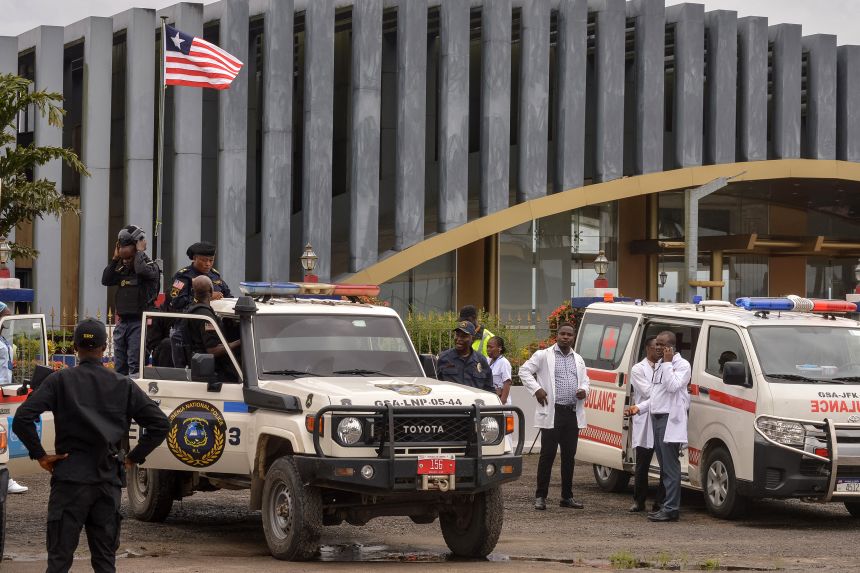
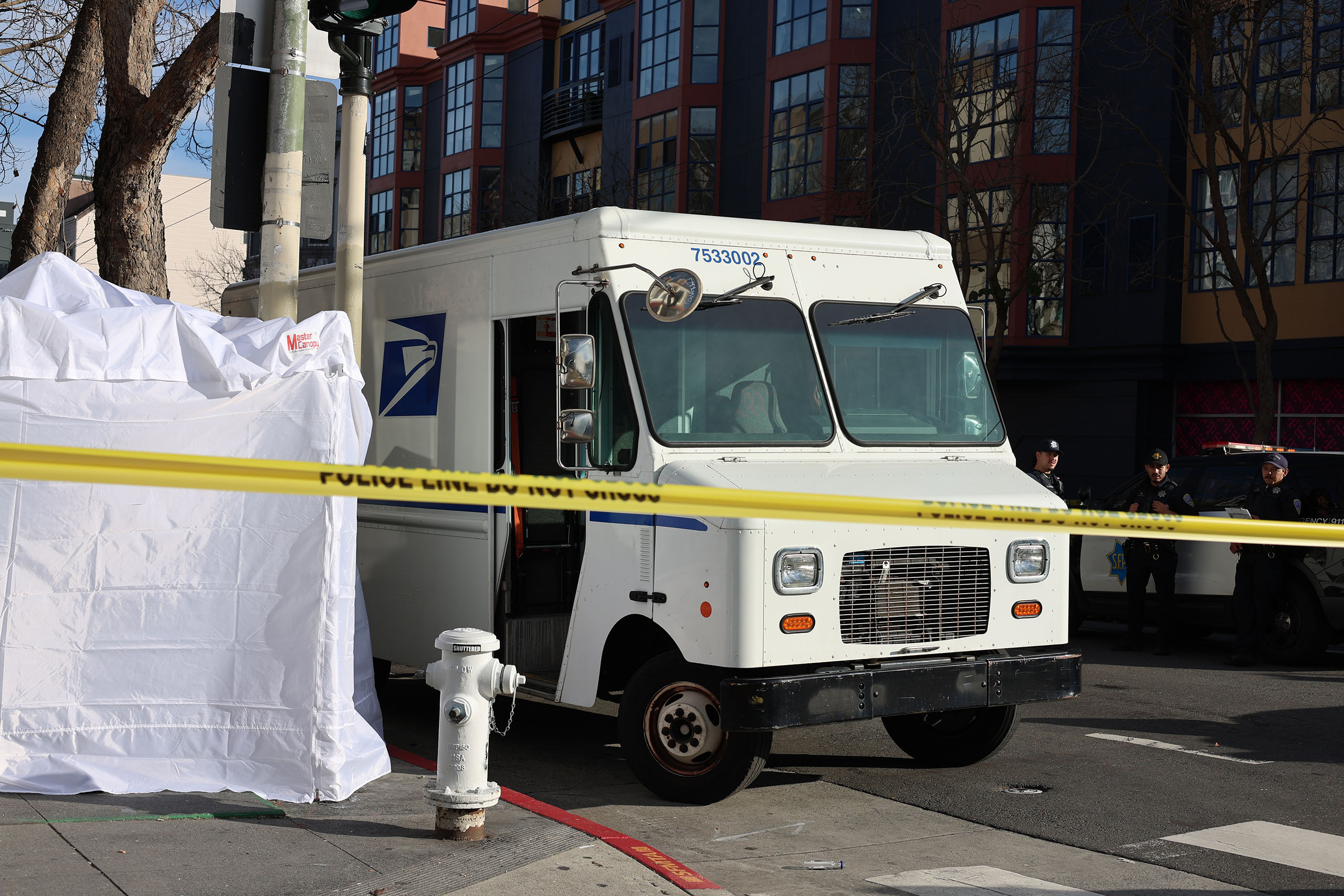
PALMETTO, Georgia — U.S. Postal Service worker Demarcus Little Sr., 45, collapsed and died June 3 while working at the Palmetto Regional Processing and Distribution Center, marking the fourth reported worker death at the facility since it opened in February 2024.
Little’s fiancée, Laura Wheaton, is fighting to get out the truth about his death. Wheaton told Atlanta News First that Little had no history of health problems or drug use. He had told a supervisor that he was feeling unwell but was not allowed to leave his shift, and after he collapsed, he was denied medical attention for an hour. Other USPS workers have called for an investigation into the multiple deaths at the facility and the overall safety issues they are facing, and have been threatened with firing in retaliation.
In November 2025, worker Russell Scruggs Jr. also collapsed at the Palmetto distribution center. An ambulance did not reach him for over an hour, and in the meantime supervisors did not administer CPR or use a defibrillator. Five months earlier, Eric Smith died at the facility with few details being released about his death. In August 2024, 48-year-old mother Sharon Barnes collapsed and died at the facility, being left without medical attention for 30 minutes. In response to these incidents, workers have continually raised concerns about the lack of cell service in the facility, which cause long delays in medical personnel reaching the site, and the lack of medical protocols and training, leaving workers without proper treatment; all this at a brand-new, “state of the art” facility.
An audit by the U.S. Office of the Inspector General in 2025 found many issues at the Palmetto site, including “overlooked safety issues,” “insufficient supervision,” and “a poor employee work culture.” Senator Jon Ossoff (D-GA) sent an inquiry to Postmaster General David Steiner, detailing the hazardous conditions at the facility and asking for a report on the measures that management agreed to after the OIG audit.
The safety issues for USPS workers is not limited to Palmetto. In November 2025, postal worker Nicholas Acker was found dead in a mail sorting machine at the Detroit Network Distribution Center. The shop paper New Day at USPS reported that safety mechanisms being intentionally disabled by management was a factor in his death. USPS was fined only $26,481 for this incident.
Amidst the deaths and injuries at USPS, the postal unions which are meant to represent the workers have taken a position of inaction, leaving workers to remain in silence about the issues they are facing for fear of retaliation.
At USPS, that workers are being overworked, under-trained, injured and, at times, killed is treated by the ruling class as a reasonable price to pay in pursuit of higher profits. In 2021, the then-Postmaster General Louis DeJoy launched the “Delivering for America” plan at USPS. The “Delivering for America” framework is aimed at making the service as profitable as possible by increasing automation, closing post offices and other facilities, and reducing staffing by more than 50,000. Additionally, non-essential hiring and training was suspended, as well as payments into workers’ pension plans. USPS has taken on “last-mile” delivery contracts with FedEx, UPS, and Amazon, who send their less profitable deliveries to be completed by USPS. This leads USPS management to seek profits through speed-ups, layoffs, and sacrificing worker safety.
The reality of “Delivering for America” is that it is a plan to prepare USPS to be sold to private capital, at the expense of both its own workers, and those who reside in the U.S. and rely on the USPS functioning as a public service.
Addendum:
On June 26, just weeks after Little’s death, 35-year-old USPS rural letter carrier Brandi Byrd Reynolds was kidnapped and murdered while delivering mail on her route in Hays, North Carolina. Deputies found Reynolds dead inside her USPS vehicle on Montieth Acres Road, and William Craig Durham, 56, was arrested and charged with first-degree murder and first-degree kidnapping. Reynolds left behind two young daughters, who had already lost their father six months earlier in a vehicle crash. Her death exposes another side of the safety crisis facing postal workers: rural carriers are sent alone into isolated areas with unreliable phone service, poor emergency support, and little protection, while management’s surveillance systems are used chiefly to discipline workers and speed up production.
These deaths tie directly to the fight taken up by New Day at USPS against privatization, automation, and the “Delivering for America” plan. New Day has identified that the push for “modernization” means deeper corporatization, fewer workers doing more labor, understaffing, job insecurity, and attacks on wages and benefits. The deaths of Demarcus Little Sr., Sharon Barnes, Eric Smith, Russell Scruggs Jr., Nicholas Acker, and Brandi Byrd Reynolds show the human cost of this program: postal workers are being sacrificed to speed-up, cost-cutting, and private profit. New Day at USPS represents an important step toward workers breaking the silence imposed by management and the union bureaucrats, exposing the real class content of “modernization,” and organizing independently to fight for safety, staffing, and a postal service run in the interests of workers and the public.
From Palmetto to Hays, these deaths are not isolated tragedies but products of a system that treats postal workers as disposable in the drive toward cost-cutting, speed-up, and privatization.