The Masses Editorial Note: This article was written prior to the proposed U.S. and Iran ceasefire. At the time of publication the status of the ceasefire remains unclear. We find the analysis remains pertinent to the conditions of the working people of the U.S., and have thus decided to proceed with its publication.
IRAN — The masses have been subject to increased oil prices, higher household costs, and renewed energy uncertainty following the outbreak of the U.S. and “Israeli” war of aggression against Iran on February 28. The war began with coordinated strikes across Iran, including the assassination of Supreme Leader Ayatollah Ali Khamenei and the grotesque murder of 168 schoolchildren. These attacks plunged the region into a wider conflict and exposed once again that U.S. Imperialism treats West Asia as a battlefield for domination, plunder, and military garrison.
The war quickly widened beyond the initial strikes. Iran retaliated against U.S. bases and Gulf states hosting U.S. forces. “Israel” expanded its war in Lebanon and continued its genocidal assault on Palestine, making clear that the war on Iran is a part of the broader regional war waged by U.S. Imperialism and its primary outpost in West Asia.
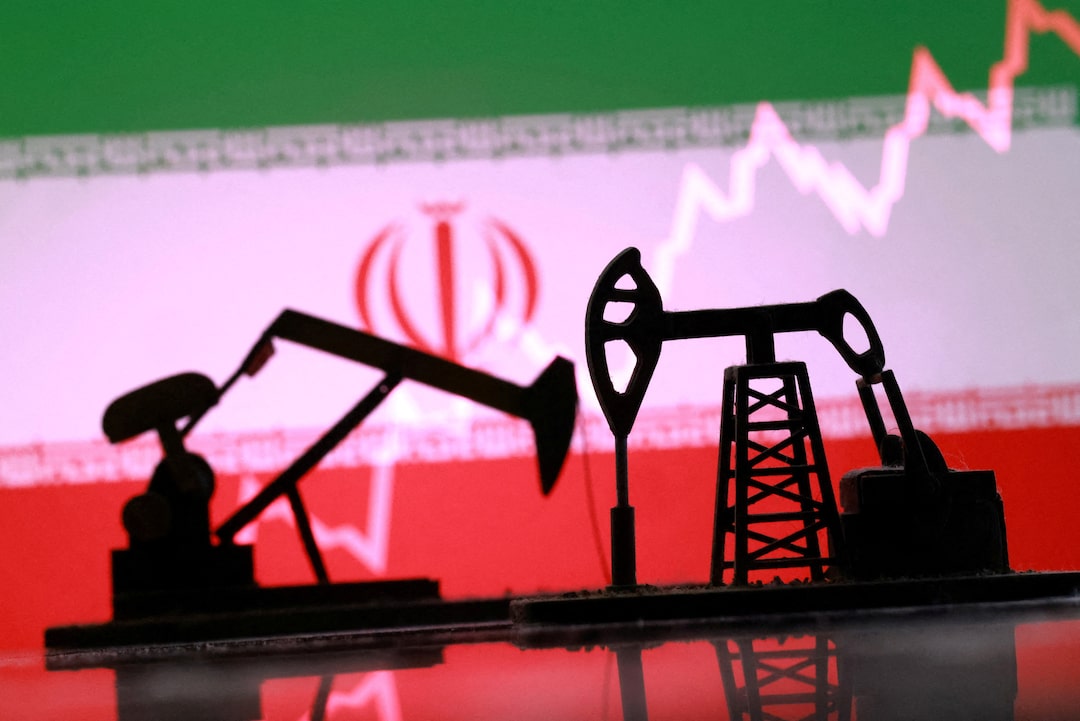
The Strait of Hormuz, through which 20% of the world’s oil and gas supplies traveled before the war, became a central battlefield. Its disruption sent global energy prices soaring while curtailing exports from major Gulf producers. The International Energy Agency reported an output drop from Gulf countries of 14.4 million barrels per day below prewar levels in April, while total global supply losses have already surpassed 1 billion barrels.
At the same time, the U.S. blockade, which began on April 13, has deepened the economic war. As a result, Iran lost roughly $5.8 billion in expected oil revenue across April and May. The U.S. is attempting to choke Iran’s oil income, force concessions over the Strait of Hormuz, and preserve its military domination of the Gulf. Iran condemned the blockade as illegal and U.S. seizures around its ports as piracy. Donald Trump gloated to that effect on May 1:
“We… land on top of it and we took over the ship. We took over the cargo, took over the oil. It’s a very profitable business…We’re like pirates…We’re sort of like pirates. But we’re not playing games.”
The cease-fire negotiations have repeatedly failed because the U.S. refuses to recognize that the Strait of Hormuz is not its territory to dominate, seize, or command. The strait is bordered by Iran and Oman, and its territorial management, by right of the United Nations Convention on the Law of the Sea, is a matter for Iran and Oman, not the U.S., “Israel,” or the Gulf regimes subordinated to U.S. Imperialism.
In violation of the April cease-fire, on June 6, U.S. forces struck Iranian coastal radar sites after shooting down drones launched toward the strait. The Revolutionary Guard Corps retaliated by attacking U.S. bases in Kuwait and Bahrain and firing at tankers attempting to cross without permission. Once missiles, drones, and naval threats turn a choke-point into a war-zone, shipping no longer moves on ordinary terms. Tankers are delayed, rerouted, insured at higher rates, or held back entirely, while producers, and refiners “price in” the risk that every cargo may become a military target.
Rising jet fuel prices raise airline operating costs, with fuel often accounting for 25% of airlines’ operating expenses. Freight costs then feed into the delivered price of food, manufactured goods, and other commodities that depend on long supply chains. In the United States, the basic costs of living are concentrated in housing, transportation, and food, which together amount to nearly two-thirds of average household spending. Energy shocks therefore are not isolated at the pump. They move through the largest categories of working-class expenditures, raising the cost of commuting, heating and cooling homes, transporting goods, and buying food. Because lower-income workers spend a larger share of their income on transportation, utilities, and basic necessities, energy inflation hits them hardest, reducing real wages most sharply for those who commute long distances, have little savings, and rely on credit between paychecks.
The average U.S. household has spent an additional $447.19 on fuel-related expenses since the outbreak of the war on Iran. Altogether, the U.S. masses have spent nearly $60 billion more on gas, airline fares and other related costs as the strait has remained effectively closed. The average price of regular gasoline has risen to $4.17 per gallon, up 40% since February. By April 2026, CPI inflation had risen to 3.8% year-over-year, up from 2.4% in February and 3.3% in March. While materially below the 2022 peak of 9.1%, the CPI price level remains permanently higher after a 25.6% cumulative increase from December 2020 to December 2025, with energy prices rising 17.9% year-over-year in April.
The Democratic Party has answered this crisis with its usual combination of impotence and fraud. On June 4, the House passed a War Powers resolution directing Trump to end military operations against Iran, but the measure did not stop the war; it demanded that Trump seek congressional authorization, giving Congress the chance to become a formal partner in the slaughter. Democratic Party leaders hailed the vote as a rebuke to Trump while continuing to fund and enable U.S. militarism. The farce was exposed the next day when the House overwhelmingly defeated a separate War Powers resolution calling for the withdrawal of U.S. troops from Lebanon, with most Democrats joining Republicans to preserve the U.S. role in “Israel’s” war.
The real causes of the war are not “democracy” or nuclear non-proliferation. They are the needs of U.S. Imperialism in a period of deepening crisis: the defense of profit, the control of oil flows and shipping lanes, the preservation of military dominance in West Asia, and the subordination of all states that obstruct U.S. command over the region. Iran’s control over its own resources, its geographic position on the Strait of Hormuz and its refusal to submit to U.S. capital make it a target. The result is paid for by the Iranian, Lebanese and Palestinian masses through bombardment, blockade, and displacement, and by the U.S. working class through inflation, debt, worsening labor conditions, and falling real wages.
It is therefore the duty of the U.S. working class to desire the defeat of the U.S. and its allies, and to do everything possible to impede the war effort.