By The Masses Editorial Board
NEWARK, NJ — Over three-hundred immigrants detained at the Delaney Hall Detention Center began a hunger and labor strike May 22, protesting illegal detention, medical neglect, spoiled food, forced labor, and retaliation inside the privately run ICE concentration camp. Delaney Hall is operated by GEO Group, a private prison corporation, and is one of the largest immigrant detention facilities on the East Coast.
The strikers are demanding the closure of Delaney Hall concentration camp following a full investigation, direct meetings with Gov. Mikie Sherrill, and the immediate release of vulnerable detainees—including the young, elderly, pregnant, and those eligible for bond or parole. The strike is both a refusal of food and a refusal to work inside. The camp forces detainees to cook, clean and maintain the facility, and by refusing labor, the detainees strike directly at the daily operations of the camp itself.
The current strike follows two letters, “Our Cry,” and “S.O.S.,” from detainees condemning physical and psychological abuse, malnutrition, unsanitary conditions, medical neglect, and legal obstacles keeping people detained indefinitely.
In a third letter, released Tuesday, detainees said they objected to “the violation of our rights as immigrant human beings” and demanded “progressive release,” arguing that many were illegally arrested and should be allowed to await immigration proceedings outside detention.
Striking detainees described rotten food containing worms, filthy bathrooms, poor ventilation, delayed medical care, unsanitary water, overcrowding, and widespread illness. They also accused ICE agents of pressuring people to sign self-deportation orders and GEO Group of forcing detainees to work without pay or for $1 an hour. In the letter’s final message to supporters outside, detainees wrote, “You give us the strength and determination to keep going. Please, DON’T GIVE UP! NO DESISTAN!”
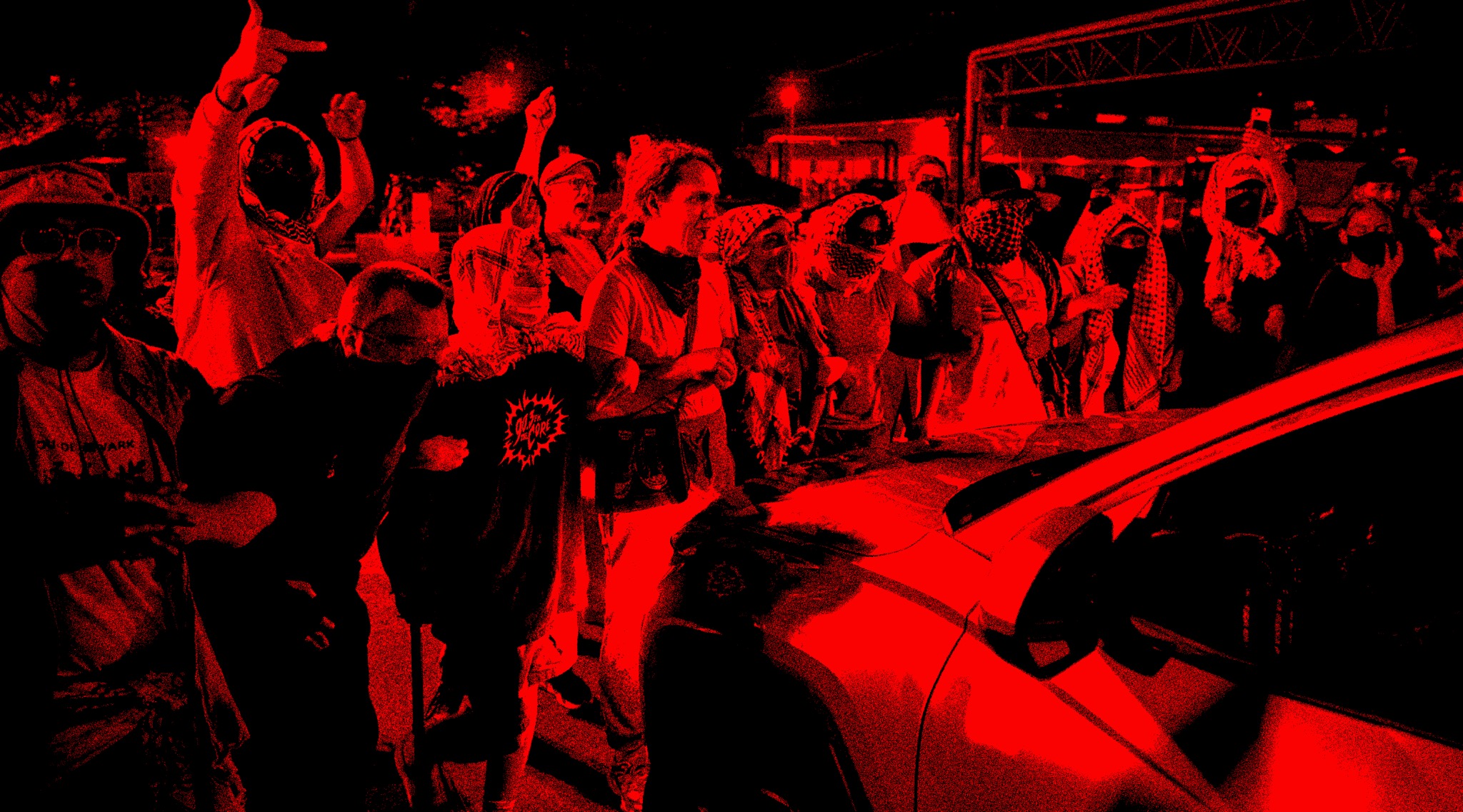
Protests outside Delaney Hall grew throughout the week as families, immigrant defense organizers, and revolutionary activists gathered at the gates in support of the strike. Demonstrators linked arms, sat and knelt in front of federal agents, blocked vehicles, and chanted “let them out!” as they tried to stop ICE from transferring detainees out of the facility. Signs outside the camp read “LET THEM OUT,” “Crimes against Humanity Here,” and “ICE out of New Jersey.”
Inside the facility, detainees have faced retaliation through transfers, suspended family visitation, blocked access to contact with relatives, and the use of chemical agents. Measures aimed at cutting detainees off from their families, lawyers and the protest movement outside.
On Sunday, May 24, Gabriella Soto, the pregnant wife of detained and starved immigrant Martin Soto, tried to visit him. While waiting outside, she saw ICE agents moving a man into a van, realized it was her husband and ran toward the vehicle. Activists joined her in blocking ICE vans from leaving, but were unable to halt his transfer to a detention center in Elizabeth, NJ, in retaliation for striking.
As the week continued, the protest line outside came into direct confrontation with ICE’s transfer operations. Activists formed human chains across the roadway, surrounded vehicles, and used their bodies to slow or stop vans moving in and out of the camp. The outside struggle became an extension of the strike inside, with families and supporters attempting to stop the isolation and dispersal of detainees who were organizing.
Federal agents responded with escalating force. ICE, ERO, and DHS officers appeared outside the facility in armored vehicles, wearing body armor including helmets, tactical vests and riot gear. Protesters were assaulted with pepper spray, pepper balls, chemical irritants, batons, rubber bullets and arrests as agents attempted to clear the road and move vehicles through the crowd.
The clashes continued through multiple nights. Activists held their ground outside the camp even as chemical agents were deployed and arrests mounted, returning to the gates to confront ICE, block transfers and denounce the imprisonment of those inside. The demonstrations drew hundreds of supporters from across New Jersey and New York, including immigrant defense groups, activists and community members bringing supplies for detainees’ families. From outside, detainees could be seen in the windows, fists raised in solidarity.
On Monday, May 25, New Jersey Gov. Mikie Sherrill was formally denied access to Delaney Hall while activists rallied outside, and by Friday, May 29, the state moved to impose designated protest zones and vehicle checkpoints around the camp. The state sponsored zones are an attempt to contain and control a growing movement that had already disrupted ICE operations, blocked transfers, exposed GEO Group’s role in profiting from detention, and forced public attention onto the strike inside. Rather than meeting the detainees’ demand for freedom, the state seeks to manage the protest, regulate its location, and push the struggle away from the gates of the concentration camp.
The confrontations are ongoing, inside and outside the camp. The state sponsored protest zones do not resolve the crisis, but reveal the state’s fear of a movement that has made the violence and fascistic militarization of ICE visible and has challenged the daily operations of GEO Group’s private prison profiteering. For the detainees and their supporters, the demand remains simple and uncompromising:
CLOSE DELANEY HALL CONCENTRATION CAMP!
FREE EVERY PERSON INSIDE!
DON’T GIVE UP! NO DESISTAN!