By Aeneas Leviné
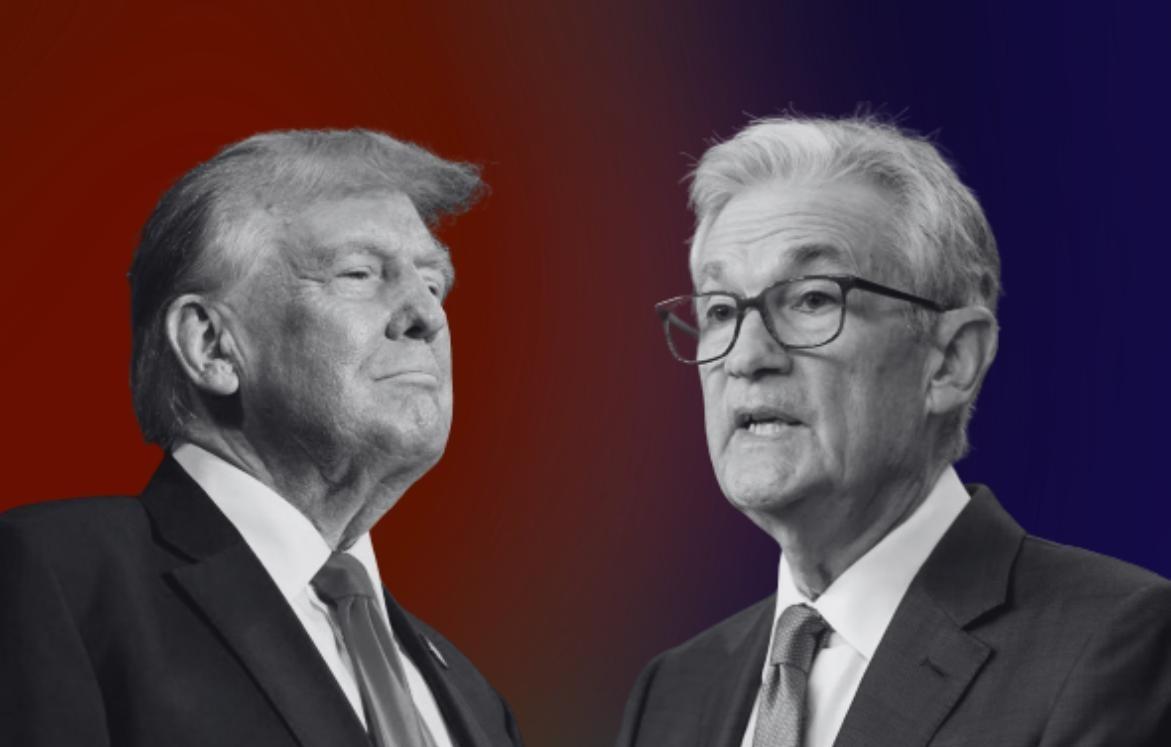
WASHINGTON – The Trump regime’s escalating pressure campaign against Federal Reserve Chair Jerome Powell has triggered an unusual display of unity from the world’s top central bankers; sixteen of whom said in a joint statement, “we stand in full solidarity with the Federal Reserve System and its Chair Jerome H. Powell.” This move comes as the U.S. Justice Department pursues a criminal investigation tied to Powell’s Senate testimony about the Fed’s headquarters renovation. Powell, in an unscheduled Jan. 11, 2026 statement, said the Fed received grand jury subpoenas and that prosecutors were threatening an indictment, which he described as “pretexts” aimed at weakening the Reserve’s independence and pressuring interest rate decisions. Trump has repeatedly demanded large rate cuts and has frequently attacked Powell publicly and vulgarly, despite Powell being nominated by Trump in 2017 and confirmed by the Senate before taking office in February 2018.
The clash has been framed as a struggle over “central bank independence,” but in reality, it is a conflict within the capitalist state over how best to manage capitalism’s contradictions. Powell represents the technocratic wing of the capitalist order; a technician tasked with keeping inflation, credit, employment, and financial stability within a range that preserves profitability and social control. Trump represents a more openly coercive wing, willing to lean into political intimidation and disciplinary spectacle; a pattern consistent with increasing fascisization of the regime, where institutions are bent toward personal command and opponents are treated as targets for repression.
That global central bankers rushed to Powell’s defense is not a sentimental gesture. It is a signal that the international capitalist class needs the U.S. financial system to remain stable, predictable, and credible as a keystone of global credit, payments, and reserve currency functions, and that an unprecedented public campaign to spuriously criminalize a sitting Fed chair risks shattering that credibility. It is for this reason that their Jan. 13, 2026, statement, posted by the European Central Bank, emphasized economic stability:
“The independence of central banks is a cornerstone of price, financial and economic stability.” Meanwhile, Trump is reported to have interviewed BlackRock CIO Rick Rieder to replace Powell as Fed Chair.
The struggle is unfolding against an unusually divided Federal Board of Governors at its last policy meeting. Minutes from the December 2025 Federal Open Market Committee (FOMC) meeting show a bruising internal debate over whether to keep cutting rates while inflation progress has stalled. Nine members voted for, and three against a quarterpoint cut, bringing the Federal Funds Rate (FFR) target range to 3.5 to 3.75%, down from 3.75% to 4.0%. The Federal Funds Rate refers to the target interest rate range, set by the Reserve, which banks charge one another to borrow reserves to meet obligations; Increasing or decreasing the rate consequently tightens or loosens borrowing costs and thus credit across the entire economy.
Of the dissenters, two favored keeping rates steady; while the third, Stephen Miran, argued for an even deeper half-point, or 0.5%, cut. This division has only intensified scrutiny of Powell’s leadership as the tug between the factions more and less averse to inflation and political pressure vie for dominance.
The Reserve’s statutory mandate is frequently described as serving “all Americans,” but its legal goals are specific and narrow. Congress has directed the Reserve to “promote maximum employment, stable prices, and moderate long-term interest rates,” a framework often called the ‘dual mandate.’ In practice, the Fed sets interest rates (through the unelected Federal Open Market Committee), manages liquidity and financial stability tools, regulates major banks, and acts as lender of last resort; functions that stabilize the banking system first, and then filter unevenly through the labor market and household living standards. In moments of crisis, the Fed’s interventions can expand dramatically, protecting the balance sheets and funding markets that anchor capitalist accumulation, while workers experience the same crises as layoffs, higher prices, rent pressure, and austerity politics.
That contradiction is why both Powell and Trump can be understood as representatives of the same class interest, even while they struggle for control. Powell’s posture is that of institutional continuity, insulating monetary policy from direct political command to maintain credibility with investors, banks, and global counterparties. Trump’s posture is that of direct political control, seeking rate cuts and demonstrating that even nominally independent institutions can be threatened into compliance. The Trump regime’s campaign also fits a broader pattern of using the state’s punitive capacities to intimidate opponents and consolidate authority. Even if officials lay low and work diligently, as Powell has, direct involvement and pressure from the executive can appear at any moment.
For working people, neither side offers liberation. A Fed insulated from elections is not insulated from capital; it is designed to be responsive to capital’s requirements, including the “discipline” of unemployment and slower wage growth when inflation becomes a threat to profitability. A regime that seeks direct command over the Fed is one which aims to re-order relations of state power and to solidify the capacity of the state executive to exert monetary policy control. The meaning of this struggle then, should be understood as a test of whether monetary policy will continue to be run, nominally, through managed procedure, monetary maneuvering, and expert insulation; or through escalating politicized coercion, with both options aimed at preserving capitalist rule in a period of social strain. Neither technocrats nor the regime can offer a solution to worsening conditions. Only independent mass organizations aimed at smashing capitalist power can end the tide of austerity, exploitation, and repression.